

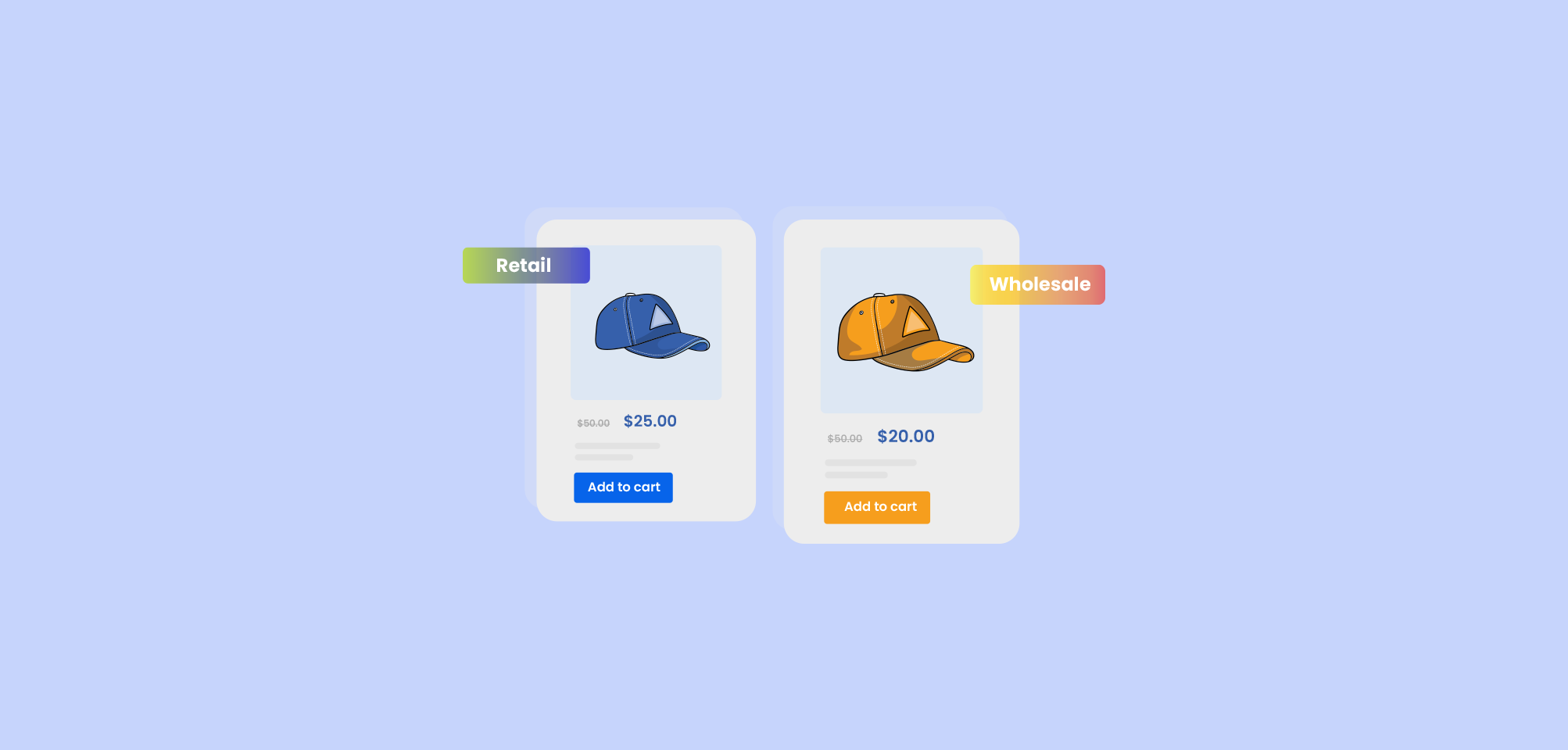
The perception a customer makes of an online store depends upon pricing. Even if you are selling to individual shoppers or large-scale buyers, pricing builds trust, conversions, and long-term relationships. As e-commerce continues to grow, many businesses are trying to serve and attract different types of customers. They are expanding to support both retail and wholesale buyers from the same store.
However, it creates a challenge when you’re selling to a mixed audience. Both retail and wholesale customers expect different prices. Retail customers expect clear and consistent pricing from sellers, while wholesale customers expect discounted rates based on volume or partnership. A single price for everyone cannot be used, as it leads to confusion, manual adjustments that need to be done frequently, and some unnecessary communications. These conditions become a severe challenge for WooCommerce stores that handle both B2C and B2B orders daily.
This is when role-based pricing for Woocommerce comes in and helps store owners to show the right pricing to the right customers by assigning different prices based on different user roles. This method makes the pricing management simple, it protects wholesale rates, and creates a smoother shopping experience for both retail and wholesale customers, supporting scalable growth.
What Is Role-Based Pricing?
Role-based pricing is a method that helps all WooCommerce store owners to show different product prices to different groups of customers on the basis of their assigned roles. The store automatically adjusts prices depending on the type of customer, like retail buyers who buy in small quantities, wholesale buyers who buy in bulk, distributors, or VIP members. There is no fixed price for everyone. In this way, pricing is accurate and relevant for each customer group.
Customer roles work when it is identified who the buyer is, and this identification is done after logging in. For example, a retail customer sees regular prices, while wholesale users see discounted prices, and a VIP customer may receive special pricing or exclusive offers. The customer needs no codes; all this work is done in the background.
Role-based pricing is simple and far more reliable than using coupons. With coupons, customers must enter codes manually, which can lead to errors or abandoned carts. With a WooCommerce discount by user role, prices are displayed correctly from the start, creating a smoother shopping experience and reducing manual work for store owners.
Challenges of Using One Price for All Customers.
Using a single-price strategy for all customers causes a lot of challenges that can negatively impact a business.
1. Pricing conflicts between retail and wholesale buyers
Using the same price for all customers does not consider that retail and wholesale buyers have different needs. Wholesale buyers buy in large quantities and expect lower prices as part of the business relationship. When these groups see the same price, wholesale customers may feel that their business is not being rewarded for buying in bulk, leading to damaged trust and reduced loyalty over time.
2. Manual discounts and quote requests
When a store uses the same price for everyone, there is no room left for flexibility. To handle this, businesses resolve this issue through manual solutions. Sales teams respond to discount requests or prepare custom quotes for multiple customers individually. This process is time-consuming, increases the chance of errors, and slows down the overall sales process. Without a clear automated pricing system, managing different user needs becomes stressful. Using woocommerce different prices for users helps resolve this issue by setting clear rules for pricing in advance and also reducing manual work.
3. Lack of pricing flexibility
When a single price is set for all businesses, it does not give them much flexibility. It makes it challenging to adjust prices based on different customers, evolving market trends, and various stages of the product’s life cycle. When prices are not easily changed, stores do not have the opportunity to attract more buyers, stay competitive, or offer special incentives to different customer groups. This limitation becomes more evident for stores that need different prices for different customers to meet diverse customer expectations.The single price for all approaches makes businesses adjust prices manually, which slows down things and limits their ability to respond to the demands of the market.
4. Impact on customer trust and conversions
When customers feel that prices are irregular or that some customers might be getting better deals through negotiations, they start to lose trust in the store. A fixed price for all can cause a lot of problems if the price is too high, as many customers leave without buying anything. And if the price is too low, the businesses may miss the chance to hit better opportunities and earn from those customers willing to pay for value when prices don’t match with different customers’ expectations or needs, resulting in frustration, fewer sales, and many lost opportunities.
How Role-Based Pricing Benefits Retail Customers
Role-based pricing creates a more consistent and reliable shopping journey. When buyers are sure about their buying decision, it lays a foundation of trust as well as a sense of security in completing their purchase. This kind of clarity makes the store owners sure that their customers feel valued and confident in their buying experience.
With product prices by user roles, retail customers having an account can login to it and view prices and discounts that are applied to them automatically based on their assigned roles. In the same way, customers who belong to loyalty programs, wholesale groups, or special memberships can receive exclusive pricing without having to worry about searching for coupon codes or manually applying discounts. This smooth pricing experience removes confusion from the checkout processes and ensures eligible customers always receive the benefits they expect.
Collectively, role-based pricing can remove confusion by showing suitable prices to suitable customers at the right time. By using role-based pricing for woocommerce, stores and businesses can easily offer a clean and straightforward buying journey that enhances satisfaction and keeps retail customers visiting the store again.
How Role-Based Pricing Benefits Wholesale Customers
Role-based pricing makes it easy for wholesale customers by giving them access to automatic discounted prices as soon as they log in. As the customers don’t have to wait for any confirmation and the system shows the correct rates based on the relevant customer role, it saves time and removes the urge for unnecessary back-and-forth communication.
Wholesale buyers also no longer need to request custom quotes or negotiate prices manually for every order. Clear and pre-addressed pricing helps them in placing their orders with confidence and speeds up the buying process. This benefits in a way that ordering becomes faster, smoother, and more consistent, motivating repeat purchases and long-term partnerships. With the help of product prices by user roles for woocommerce, many businesses can create a professional wholesale experience that supports growth and efficiency.
How to Set Up Role-Based Pricing in WooCommerce
Setting up role-based pricing is very simple, and you don’t need any technical knowledge for that. The steps are as follows.
- Install and activate the role-based pricing plugin from your WooCommerce store. When the installation is completed, it will add new pricing options to your dashboard, giving you options to manage different prices easily.
- Then create different groups of customer roles like retail, wholesale, distributor, or VIP, and assign these roles from groups to appropriate users. It helps the system to function appropriately and identify which customer should see which price with role based discounts. One done, set pricing rules and discounts for each role at the product or category level.
- Lastly, test pricing by logging in pretending to be different customers having different user roles to make sure each customer sees the accurate price suited to their role. Using woocommerce pricing plans ensures that your pricing is accurate, automated, and fits each user group without having to set prices manually.
Common Use Cases of WooCommerce Role-Based Pricing
WooCommerce role-based pricing is used by online stores that sell to more than one type of customer and require flexible pricing without manual effort. One of the most common use cases is stores that sell to both retail and wholesale customers. Retail buyers buy in small quantities and expect fixed prices every time, while wholesale buyers purchase products in bulk quantities and expect discount by user role rates. Role-based pricing makes sure that each group of customers sees the right price automatically, avoiding any confusion and pricing conflicts.
B2B stores that work with distributors, resellers, or long-term business partners are another important use case. These user groups have unique pricing arrangements that make them stand out from other consumers. It is time-consuming and hard to manage all these arrangements manually. Role-based pricing lets retailers apply specific prices to each customer role, allowing customers to see their negotiated prices as soon as they log in. In this way, it improves trust and boosts ordering.
Role-based pricing also benefits membership and VIP stores. Many stores give an advantage to loyal customers by offering special discounted prices. Instead of coupons or manual applying discounts, role based pricing automatically applies special prices to logged-in members or VIP users. Role-based pricing generates a flexible and trouble-free shopping experience and motivates repeat purchases.
Another practical use is stores offering different pricing levels like standard, premium, or enterprise. Role-based pricing can manage and control who can see which price. It works well for businesses offering subscriptions, service providers, or stores offering long-term contracts.
Role-based pricing also helps stores that prefer to show prices only to logged-in users or specific customer groups. This approach is helpful in wholesale or B2B stores where pricing is not meant to be public.
Overall, WooCommerce role-based pricing is good for stores that want to manage complex pricing structures uniquely and simply. It reduces manual effort and enhances buying experience, supports long-term customer relationships, and allows businesses to expand while keeping prices fair and manageable.
Conclusion
Role-based pricing is a gateway to managing different customer needs within a single WooCommerce store. By clearly assigning what customers have what role, businesses can maintain consistent pricing for retail shoppers while offering fair discounts to wholesale customers, satisfying both groups creates a smooth buying experience for store owners as well as buyers.
Also, role-based pricing is a long-term strategy for managing your business and growing it. With the passage of time, as your store grows, you can serve more customers efficiently. This pricing model allows you to continuously adapt to the changing pricing structure. It helps in building trust and transparency and improves customer loyalty. It also ensures that prices remain intact with customer value over time.
By using role-based pricing for WooCommerce, store owners can successfully expand retail as well as wholesale sales. It creates a balanced system where many customers can feel valued, pricing stays organized, and the business is well-positioned.
FAQ
1. Can retail and wholesale customers use the same WooCommerce store?
Yes, retail and wholesale customers can use the same WooCommerce store for shopping. Each customer sees a different price depending on what category of user role they fall into. In this way, pricing remains clear, and confusion is reduced.
2. Is role-based pricing better than using discount coupons?
Absolutely, it is better because role-based pricing is applied automatically without the need for any manual coding, also customers don’t need to enter any codes, reducing errors or abandoned carts.
3. Will role-based pricing affect existing customers or orders?
No, role-based pricing does not affect existing customers; they simply are assigned to the role they fall into. Existing customers will see the right prices for them without affecting past orders or store data.
4. Can guest users see special prices?
Special prices are only shown to logged-in users or users who have created an account. Guest users are shown regular prices; in order to see special offers, create an account and log in.
